
Hostile
Vehicle
Mitigation
Bollards
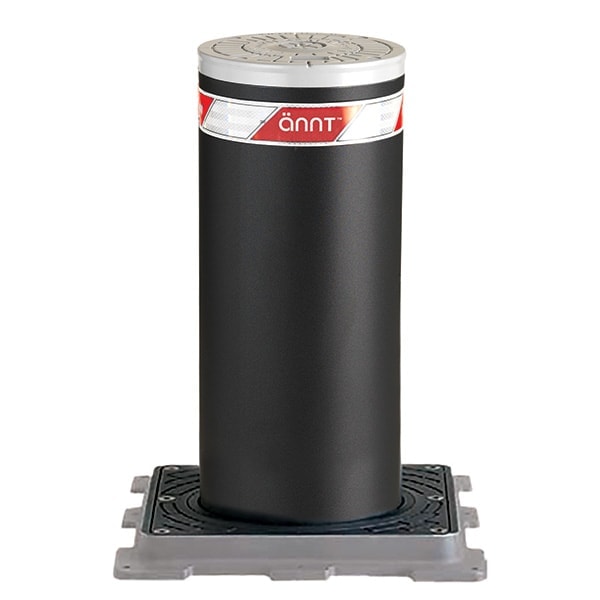
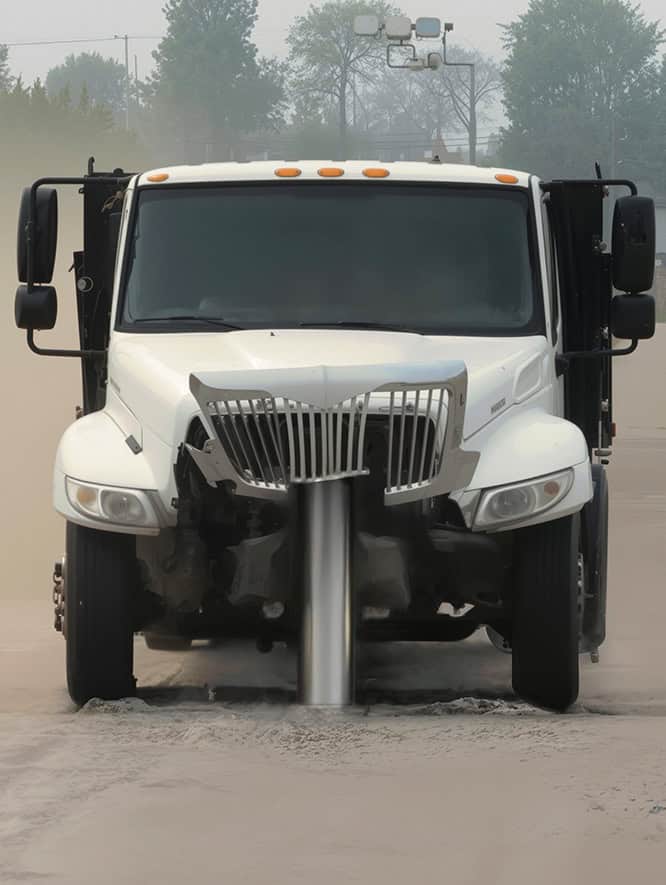
Certified to stop a 15,000 lb vehicle. Engineered for Canadian government, institutional, and commercial sites that cannot afford to fail.
What is Hostile Vehicle Mitigation?
Hostile Vehicle Mitigation (HVM) is a protective security discipline focused on preventing vehicle-borne attacks from reaching their targets. It integrates physical barriers, traffic management, threat assessment, and operational protocols into a coordinated perimeter security strategy.
HVM addresses two primary threat categories: vehicle-borne improvised explosive devices (VBIED), where a vehicle carries a bomb, and vehicle-as-weapon (VAW) attacks, where the vehicle itself is the weapon. The 2016 Nice attack, the 2017 Westminster Bridge ramming, and the 2018 Toronto Yonge Street attack all fall into the VAW category — no explosives required.
Physical bollards are the most visible and reliable output of HVM planning. To perform as specified, they must be independently crash-tested, correctly specified through a Vehicle Dynamics Assessment (VDA), and installed to the manufacturer’s certified dimensions. A bollard that is “engineered to M50 performance” without third-party crash testing is not a certified M50 product.
HVM in Canada: Policy, Funding, and Response
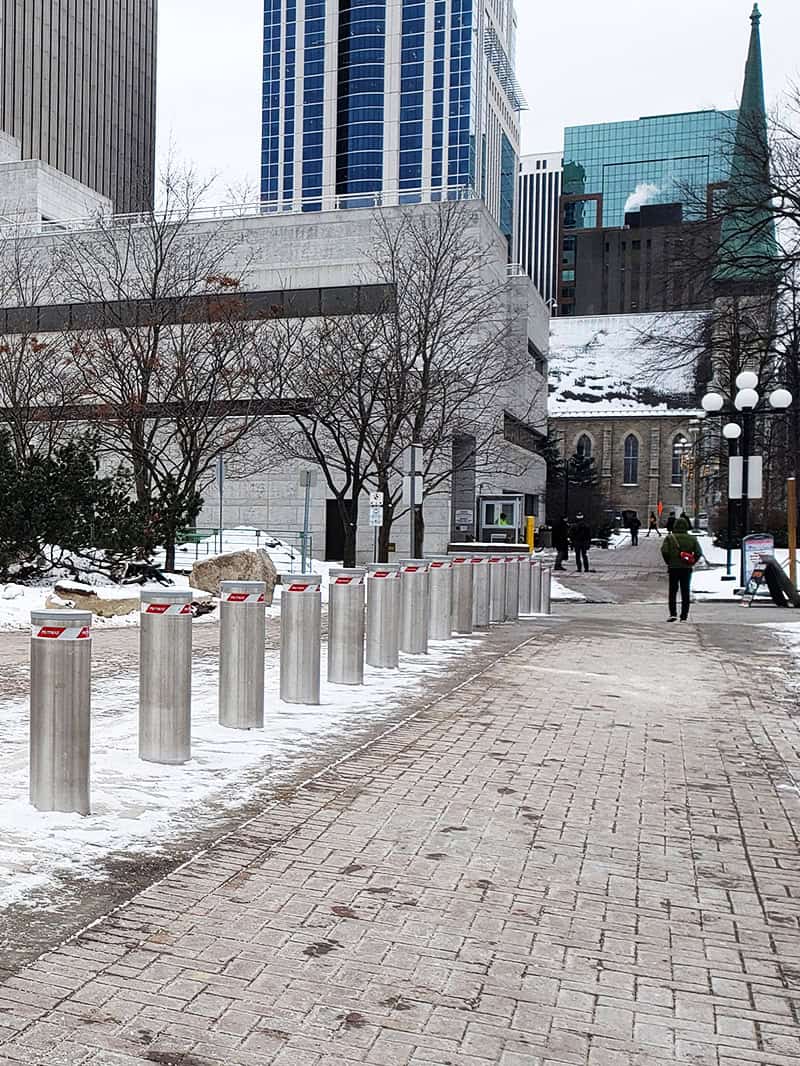
On April 23, 2018, a van drove into pedestrians on Yonge Street in Toronto, killing 10 people and injuring 16. It was the most significant vehicle-as-weapon attack on Canadian soil — and it permanently changed how municipalities, institutions, and property owners approach perimeter security.
In December 2024, Toronto City Council committed $2.5 million to a dedicated HVM Grant Program offering up to $100,000 per eligible organization to fund TVRAs, site engineering, and certified bollard installation. Public Safety Canada’s Community Security Program separately funds fixed crash-rated bollards for organizations facing a credible threat of vehicle ramming near public gathering areas.
ANNT is one of the only Canadian manufacturers of HVM bollards independently tested and certified to stop a 15,000 lb vehicle — giving Canadian buyers domestically sourced, certified protection with local technical support and shorter lead times than imported alternatives.
Explore Grant-Eligible ProductsCrash-Rated HVM Bollards
Every ANNT HVM bollard is independently crash-tested and certified — not just engineered to spec. Fixed, automatic, shallow-mount, and portable options available to cover every site condition.

Fixed HVM Bollards
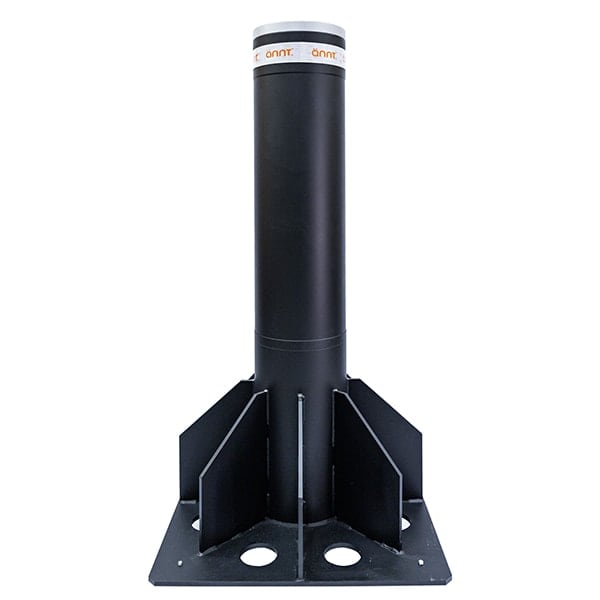
Permanently installed, in-ground bollards for high-security perimeters. No moving parts. Maximum passive stopping power. Ideal for government, embassy, and critical infrastructure applications.
- Peak rating ASTM M50 / K12
- Foundation depth 600–2,000mm
- Standards ASTM F2656, PAS 68
- Starting from $4,695
Automatic Retractable Bollards
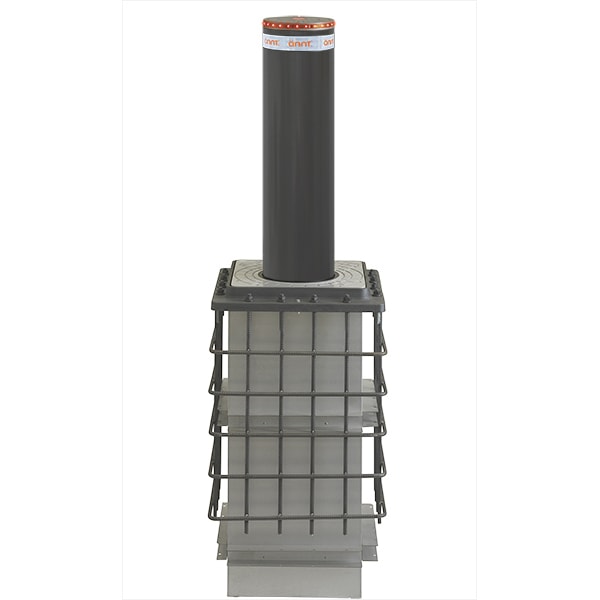
Crash-rated bollards with automated raise/lower operation. Up to 2,000 cycles per day. Emergency Fast Operation (EFO) available for heightened-threat response. Designed for managed access points that require both security and throughput.
- Rating M50 / K12
- Daily cycle capacity Up to 2,000/day
- Service life 3M+ cycles
- EFO option Available

Shallow Foundation Bollards
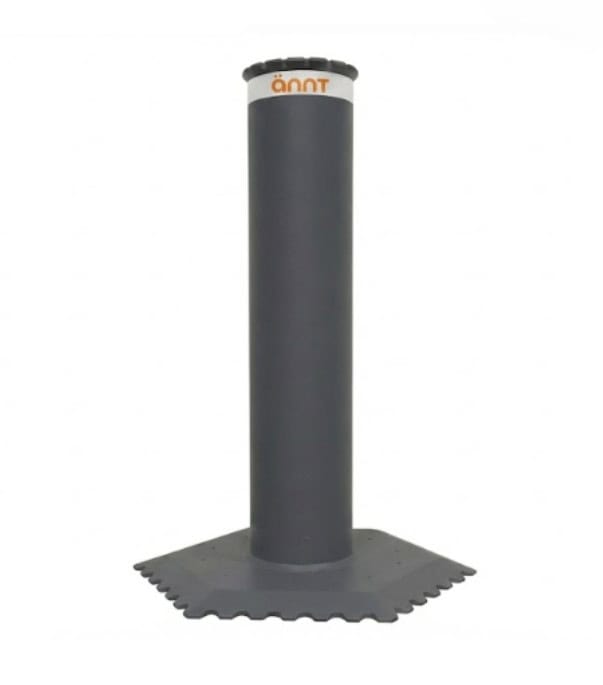
K12-rated protection with a 200mm foundation depth — 10x shallower than standard in-ground bollards. Independently certified to K12/M50, PAS 68, and IWA 14-1. Designed specifically for suspended slabs, parkade decks, and sites with underground utilities where standard bollards cannot be used.
- Foundation depth 200mm only
- Rating K12 / M50, PAS 68, IWA 14-1
- Impact energy Up to 2,000,000J
- Starting from $18,320

Portable & Deployable HVM
Surface-mounted crash-rated bollards with zero foundation requirement. Rapid deployment for public events, temporary venue security, or locations where ground penetration is not possible. The ättaGard delivers certified stopping power without excavation.
- Foundation None — surface mount
- ättaGard from $5,960
- Mobile Road Blocker M30 rated
- Best for Events, plazas, retrofits
Understanding HVM Crash Ratings
ASTM F2656 is the primary crash testing standard referenced in North American government procurement. It replaced the US Department of State’s K-rating system, though both designations are still used side by side in product specifications and procurement documents.
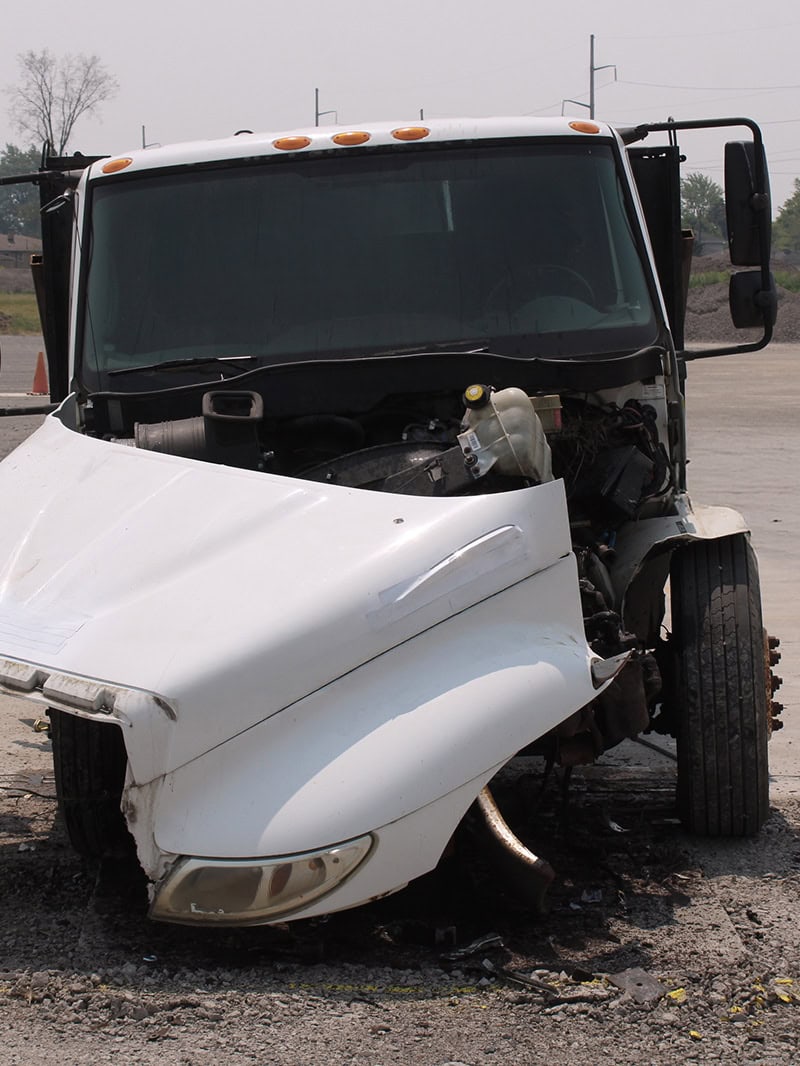
All three ASTM ratings use the same test vehicle — a 15,000 lb (6,800 kg) medium-duty truck. The rating reflects the impact speed at which the bollard stops that vehicle. A penetration rating of P1 (one foot or less of payload travel past the barrier) is the highest level of protection available.
PAS 68 and IWA 14-1 are UK and ISO international standards widely used by global specifiers. Both have been superseded by ISO 22343 (published September 2023), but products tested to the earlier standards prior to March 2024 retain their certification validity.
ASTM F2656 Reference
| M-Rating | K-Rating | Vehicle | Test Speed | P1 Penetration |
|---|---|---|---|---|
| C40 | — | Varies | Entry-level certified | Contact ANNT |
| M30 | K4 | 15,000 lbs | 30 mph (48 km/h) | ≤ 1 ft (0.3m) |
| M50 | K12 | 15,000 lbs | 50 mph (80 km/h) | ≤ 1 ft (0.3m) |
ANNT products are crash-certified from C40 through M50/K12. M40/K8 exists as an ASTM F2656 rating but is not part of ANNT’s certified product range. Contact us to confirm the appropriate rating for your application.
Where HVM Bollards Are Specified
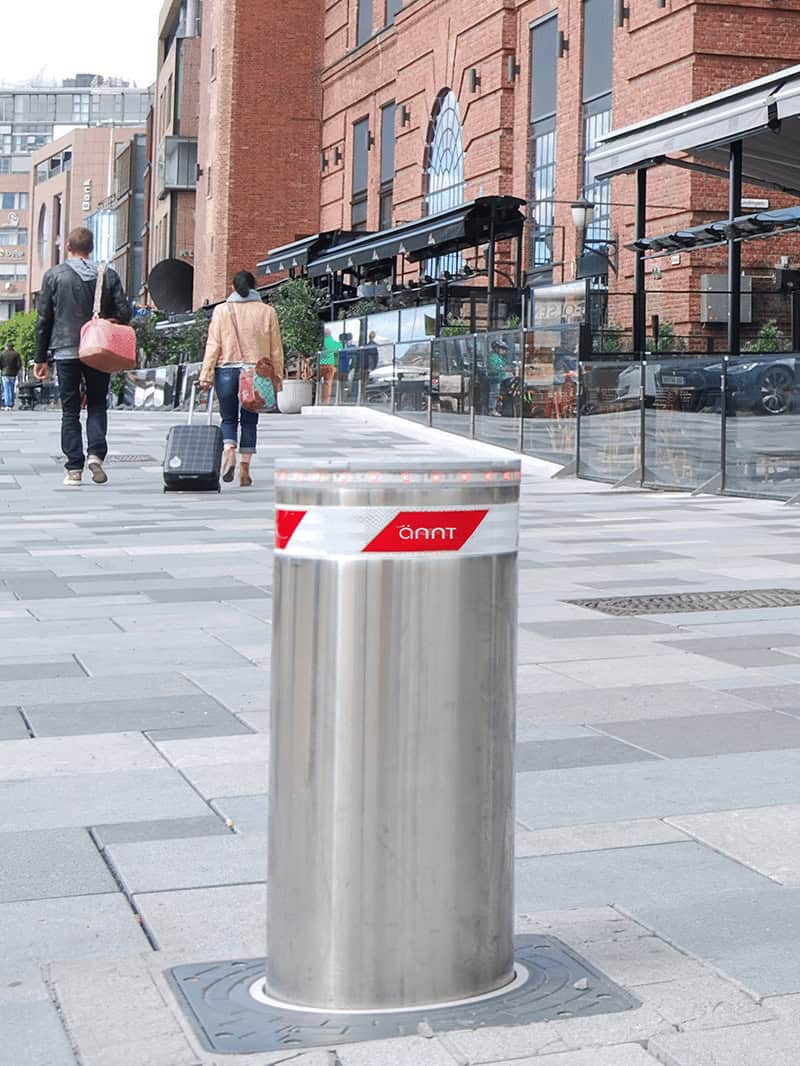
Vehicle ramming is not a single-sector threat. The following industries regularly specify crash-rated bollards as part of their perimeter security strategy.
Government Buildings
Federal offices, courthouses, and service centres. Typically M50/K12 minimum. Referenced in PSPC and RCMP Physical Security guidelines.
Transit Hubs
Airports, train stations, and bus terminals. Landside HVM has expanded significantly since 2016 to cover high-density pedestrian areas.
Public Plazas
Pedestrianized streets, markets, and open gathering spaces. Toronto, Ottawa, and Vancouver all have active municipal HVM programs underway.
Places of Worship
Mosques, synagogues, churches, and temples. Public Safety Canada’s Community Security Program funds certified bollard installation for at-risk organizations.
Schools & Daycares
Drop-off and pick-up zones create predictable, high-density pedestrian exposure. ANNT products are actively deployed in Ontario school and daycare applications.
Critical Infrastructure
Data centres, power stations, water facilities, and telecoms. Vehicle-based sabotage is a documented threat vector with potential national-security consequences.
Stadiums & Events
Fixed perimeter bollards plus portable deployable solutions for event access management. Insurance requirements and public assembly licensing are the primary drivers.
Retail & Commercial
Ram-raid protection for high-value retail, dispensaries, ATMs, and financial institutions. Often triggered by insurer mandate following an incident at a nearby property.
HVM Bollard Specification Table
Use the table below to identify the appropriate product for your site. All products listed are independently crash-tested. Contact ANNT for current data sheets, CAD drawings, and installation specifications.
| Product | Category | Crash Rating | Foundation | Standards | Starting Price |
|---|---|---|---|---|---|
| Fixed Bollards | |||||
| FX150/C40-900 | Fixed | C40 | Standard | Certified | $1,030 |
| FB275/K4-900 | Fixed | M30 / K4 | Standard deep | ASTM F2656 | $3,500 |
| FB275/M30-1000 | Fixed | M30 / K4 | Standard deep | ASTM F2656 | $3,165 |
| FB275/K12-900 | Fixed | M50 / K12 | Standard deep | ASTM F2656, PAS 68 | $4,900 |
| FB275/M50-1000 | Fixed | M50 / K12 | Standard deep | ASTM F2656 | $4,695 |
| Fixed Shallow Foundation | |||||
| FXSF275K4-900 | Fixed Shallow | K4 | 200mm | ASTM F2656 | $10,900 |
| FXSF275K12-900/1200 | Fixed Shallow | K12 / M50 | 200mm | ASTM F2656, PAS 68, IWA 14-1 | $18,320 |
| Removable Bollards | |||||
| RM150/C40-900 | Removable | C40 | Standard | Certified | $1,955 |
| RM275/K4-900 | Removable | M30 / K4 | Standard | ASTM F2656 | $12,270 |
| RM275/M30-1200 | Removable | M30 / K4 | Standard | ASTM F2656 | $14,720 |
| RM275/K12-900 | Removable | M50 / K12 | Standard | ASTM F2656 | $21,375 |
| Automatic Retractable | |||||
| AE275/K4-900 | Automatic | M30 / K4 | Contact for spec | ASTM F2656 | $19,835 |
| AE275/M30-1200 | Automatic | M30 / K4 | Contact for spec | ASTM F2656 | $22,745 |
| AE275/K12-900 | Automatic | M50 / K12 | Contact for spec | ASTM F2656 | $32,800 |
| AE275/M50-1200 | Automatic | M50 / K12 | Contact for spec | ASTM F2656 | $36,800 |
| Portable & Deployable | |||||
| ättaGard Bollard | Portable | Crash-Certified | None — surface mount | Certified | $5,960 |
| Mobile Road Blocker | Portable | M30 | None — surface mount | ASTM F2656 | $16,240 |
Prices shown are starting prices in CAD. Specifications and pricing subject to change. Contact ANNT for current data sheets, CAD drawings, and installation specifications.
What Separates ANNT from the Field
Canadian Manufacturer
One of the only Canadian manufacturers of HVM bollards independently crash-tested to stop a 15,000 lb vehicle. Shorter lead times, local technical support, and a domestic supply chain that simplifies government and institutional procurement.
200mm Shallow Foundation
Standard in-ground HVM bollards require 600–2,000mm of foundation depth. ANNT’s shallow-mount line achieves K12/M50 certification with a 200mm foundation — enabling certified installation on suspended slabs, parkade decks, and sites with underground utility conflicts where standard bollards are not viable.
Single-Bollard Certified
Many crash-rated barriers require a specific array configuration to achieve their published rating. ANNT products are certified as individual units, giving specifiers and security engineers greater flexibility in layout, spacing, and retrofit applications.
Full Rating Range — One Supplier
C40 through K12/M50. Fixed, removable, automatic retractable, shallow-mount, and portable deployable — plus architectural cover systems that pass municipal planning approvals. A complete certified HVM portfolio from one Canadian source.
Frequently Asked Questions
Ready to Specify
Certified HVM Protection?
ANNT works directly with architects, security consultants, and facility managers across Canada. Specification data sheets, CAD drawings, and technical consultation available on request.